Vera Bauer · 13 October 2026
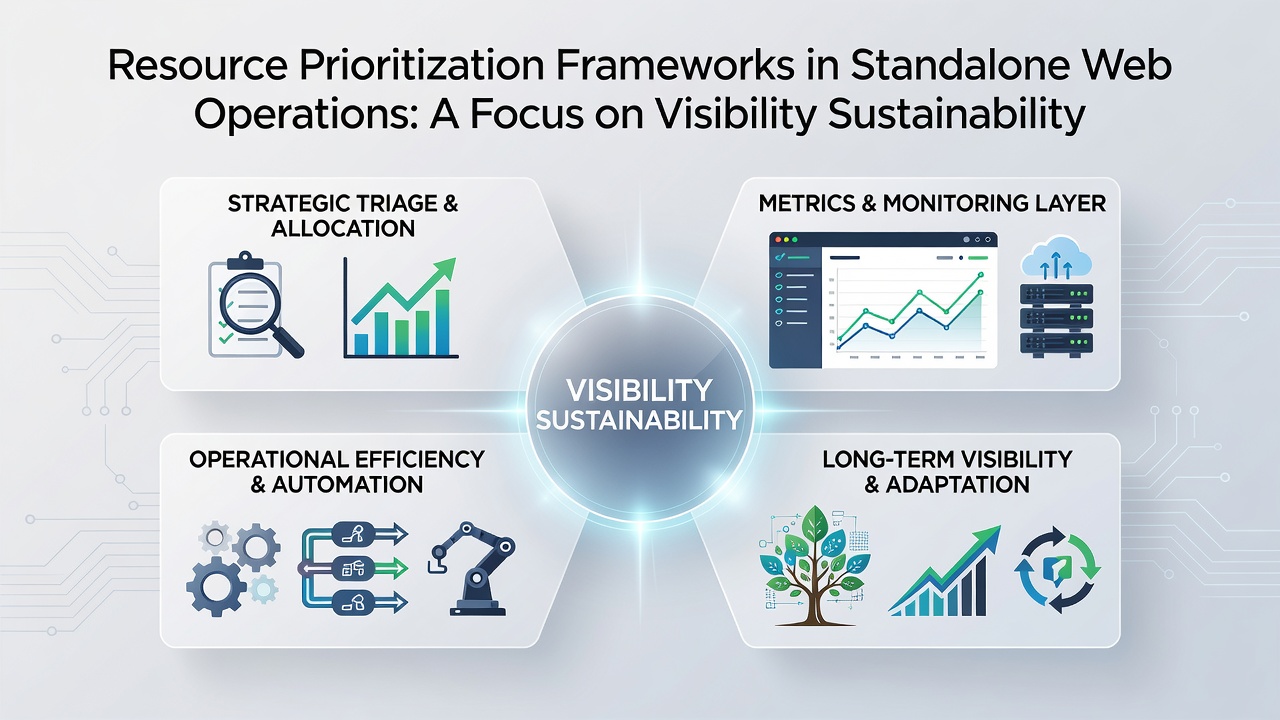
Resource Prioritization Frameworks in Standalone Web Operations: A Focus on Visibility Sustainability
Standalone web operations rely on structured approaches to allocate limited resources while preserving online presence, and researchers have documented how prioritization frameworks help teams balance immediate technical needs against ongoing visibility goals; data from multiple studies shows that sites without such systems often experience fluctuating search rankings and audience retention rates over multi-year periods.
Frameworks like weighted scoring models and dependency mapping allow operators to rank tasks according to impact on core metrics such as organic reach and load performance, while evidence from industry reports indicates that these methods reduce wasted effort on low-yield activities like redundant plugin updates or unfocused social cross-posting; in October 2026 new datasets released by the OECD highlighted how small-scale digital properties using formal prioritization saw steadier traffic patterns compared with ad-hoc approaches.
Core Components of Effective Frameworks
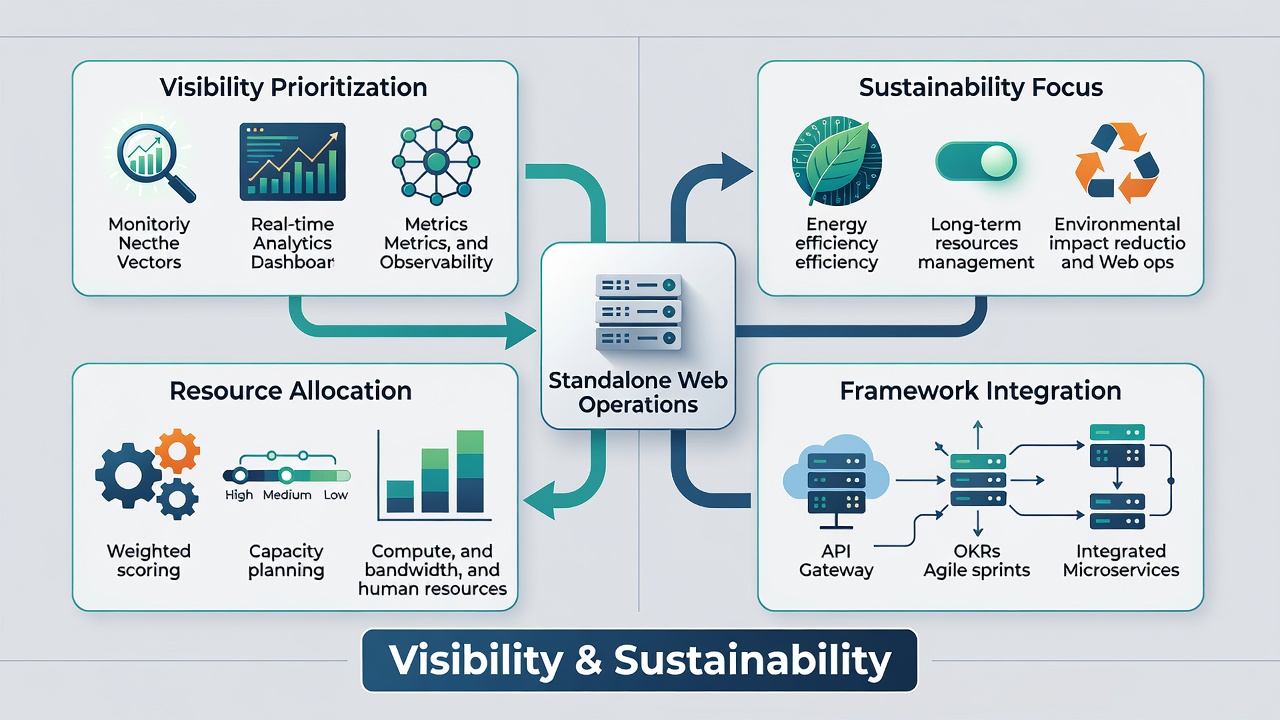
Visibility sustainability hinges on identifying which operational elements directly influence discoverability, and analysts note that frameworks typically begin with an audit phase that catalogs assets including server configurations, content libraries, and backlink profiles; once cataloged, tasks receive scores based on criteria such as estimated time investment, potential ranking lift, and alignment with seasonal traffic cycles, creating a ranked queue that guides daily decisions.
Dependency mapping forms another key layer because many visibility tasks interconnect, for instance updating schema markup often affects both crawl efficiency and rich snippet eligibility, and studies from European digital economy initiatives reveal that operators who map these connections first avoid cascading delays that erode sustainability; the process uses simple matrices that plot urgency against long-term value, allowing teams to shift focus when external factors like algorithm adjustments occur.
Implementation Patterns Observed Across Independent Sites
Operators frequently adopt hybrid models that combine elements of the Eisenhower matrix with custom visibility weightings, and figures from academic tracking projects demonstrate higher consistency in domain authority scores when such hybrids replace pure intuition-based scheduling; resource logs kept over 18-month windows show reduced downtime on high-impact items such as core web vital optimizations and internal linking audits.
Case examples collected by research institutions in Canada illustrate how one independent news aggregator applied quarterly reviews to re-score priorities after a major search engine update, resulting in maintained referral traffic levels despite broader industry dips; similar patterns appear in reports covering Australian digital small businesses where integration of visibility metrics into weekly planning cycles correlated with steadier indexed page counts.
Measurement and Adjustment Mechanisms
Sustained visibility requires ongoing measurement tied directly to framework outputs, and data indicates that dashboards tracking metrics like crawl frequency, bounce rates on key landing pages, and backlink acquisition velocity provide the feedback loops necessary for recalibration; when thresholds are crossed, frameworks trigger re-prioritization without requiring full audits each time.
October 2026 updates to several open-source tracking tools incorporated new visibility decay indicators, enabling more granular alerts when resources drift away from sustainability targets, according to documentation released alongside those tool versions; operators who incorporated these indicators into existing scoring systems reported fewer emergency fixes and smoother workload distribution across calendar quarters.
Integration with External Data Sources
Frameworks gain precision when they pull from authoritative external benchmarks, and OECD digital transformation reports supply comparative statistics on resource allocation outcomes across regions; similarly, analyses published through Canadian government innovation portals offer localized benchmarks that help standalone operators calibrate their scoring criteria against national digital performance averages.
Cross-referencing internal logs with these sources allows refinement of weighting factors, for example adjusting the value assigned to mobile performance scores when regional connectivity data changes; this practice keeps frameworks responsive without introducing subjective judgment into the ranking process itself.
Conclusion
Resource prioritization frameworks supply repeatable structures that support visibility sustainability in standalone web operations, and longitudinal data confirms their role in stabilizing key performance indicators across varied site types; continued refinement through integration of external benchmarks and measurement feedback loops sustains these benefits as operational conditions evolve.